
Guest Posting vs Niche Edits: Cost, Control and Editorial Differences
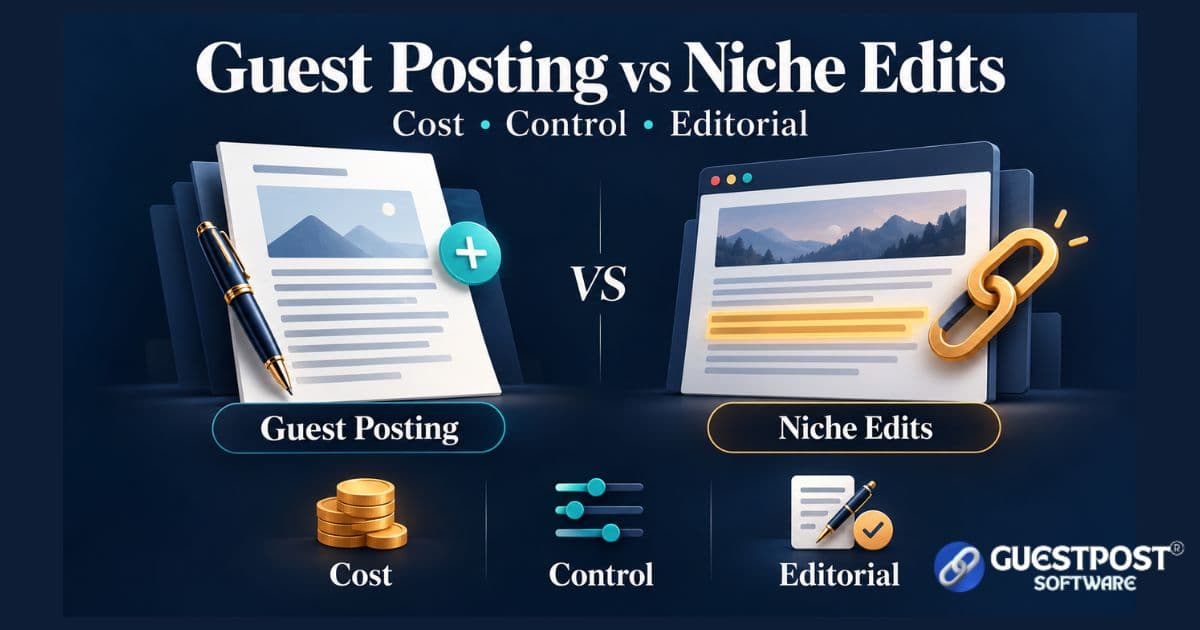
Guest posting gives you more control and a fresh article, while niche edits cost less per placement and go live faster. Neither is better for everyone. The right choice depends on your budget, how much say you need over the content, and how the publisher treats the work editorially. This guide compares the two side by…
Guest posting gives you more control and a fresh article, while niche edits cost less per placement and go live faster. Neither is better for everyone. The right choice depends on your budget, how much say you need over the content, and how the publisher treats the work editorially.
This guide compares the two side by side. You will see what each one is, what it usually costs, who controls what, and how editors handle each type. It ends with practical scenarios, so you can match the tactic to your own campaign.
What Are Guest Posting and Niche Edits?
Guest posting
A guest post is a new article written for a third-party website and published under the host site's name or a guest author byline. The article is planned around that site's readers. Inside it, you get a contextual mention or link to a relevant page on your own site.
For example, an HR software company might write "How to Draft a Leave Policy for a 50-Person Team" for a small-business blog. The article teaches something useful first. The link to the company's leave policy template appears only where it helps the reader.
Niche edits
A niche edit, also called a link insertion or curated placement, adds your mention to an article that is already published. No new article is written. Instead, the publisher edits one or two sentences in an existing post so that your page becomes a relevant reference.
For instance, a two-year-old article titled "10 Ways to Cut Admin Time in Small Businesses" might gain one new line: a point about automated leave tracking that references the same template page.
In short, guest posting creates new content, while a niche edit changes old content. That one difference drives almost every gap in cost, control, and editorial treatment.
Guest Posting vs Niche Edits at a Glance
The table below summarises the practical differences. Each row is explained in the sections that follow.
Factor | Guest posting | Niche edits |
|---|---|---|
What you get | A new article on the host site | A mention added to an existing article |
Average price (BuzzStream, 2026) | About $295 direct, $461 through a vendor | About $179 |
Typical time to go live | 1 to 4 weeks | A few days to 2 weeks |
Who writes the content | You or your provider | The publisher already wrote it |
Control over topic and angle | High | Low |
Control over anchor and placement | High, within editor rules | Moderate; must fit existing text |
Article age and indexing | New page; needs time to be indexed | Already indexed, sometimes with traffic |
Editorial review | Full review of a new draft | Light review of one or two sentences |
Best for | Thought leadership, new topics, brand building | Supporting existing pages on a limited budget |
Cost Differences
Niche edits usually cost less per placement because no one has to write, edit, or format a new article. According to BuzzStream's link pricing analysis, link insertions average about $179, while guest posts average about $295 when bought directly from a publisher and about $461 through a vendor. Those averages hide a wide spread, however. BuzzStream notes that guest posts alone range from roughly $150 to $10,000.
What drives the price
Publisher quality: steady, relevant traffic and real editorial standards cost more in both formats.
Niche: finance, health, legal, and technology sites usually charge more than lifestyle blogs.
Content work: guest posts carry writing and editing costs; niche edits carry almost none.
Page value: a niche edit on an article that already ranks and gets visits can cost as much as a new guest post.
Service level: a managed provider adds research and coordination time on top of the publisher fee.
Worked example: the same $1,500 budget
Imagine a SaaS company with $1,500 to spend in one quarter. Spent on niche edits at roughly $180 each, the budget buys about eight placements. Spent on guest posts at roughly $300 each, it buys five. With writing outsourced at $50 to $100 per article, it buys four.
The cheaper option is not automatically the better deal, though. Eight insertions in old, low-traffic articles may send fewer readers than four strong guest posts on active sites. For that reason, compare the cost per relevant reader or per qualified visit, not just the cost per placement. You can compare live prices for both formats on our guest post sites marketplace or start from fixed-price guest post packages.
Control: Content, Anchor, Placement and Timing
Guest posting gives you control over the whole article, whereas a niche edit gives you control over one sentence at most. Here is how that plays out in four areas.
Content and angle
With a guest post, you choose the topic, the examples, and the argument. As a result, the article can reflect your own data or experience. With a niche edit, the article already exists. Your mention must fit someone else's angle, tone, and structure, so you cannot add new depth.
Anchor text and link position
In a guest post, you can usually propose the anchor and place the link in the section that discusses your topic. Editors still have the final say. In a niche edit, the anchor has to match the surrounding sentence. Publishers often rewrite awkward insertions or move them to a less visible spot.
Context around the link
A guest post builds a full paragraph of relevant context around your mention. A niche edit inherits whatever context the old article has. If the article is loosely related to your page, the mention will look loosely related too.
Timing and permanence
Niche edits often go live within days, which helps when a campaign has a deadline. Guest posts take longer because of drafting and review. On the other hand, older articles get updated, pruned, or deleted more often than new ones, so a niche edit can disappear in a site clean-up. Either way, check what replacement terms apply before you pay.
Editorial Differences and Google's Guidance
A guest post goes through a full editorial review, while a niche edit usually gets a quick check of one or two sentences. That difference affects quality, risk, and how readers see your brand.
How editors treat each format
Good publishers review guest posts much like their own content. They check facts, tone, structure, and whether the article serves their readers. As a result, a published guest post carries the site's editorial approval.
Niche edits get less scrutiny. In the best case, an editor adds a reference that improves the article, such as a link to a current statistic that replaces an outdated one. In the worst case, a site owner inserts paid mentions into old posts with no review at all. That pattern is a warning sign about the whole site. Always check the Guest Post Publisher Red Flags before making the final selection and decision.
What Google says about paid placements
Google's spam policies describe link spam as links created mainly to manipulate rankings, and buying or selling links for that purpose is one example. However, the same policy accepts that paid links are a normal part of advertising, provided they are qualified with rel="sponsored" or rel="nofollow". Google's guide to qualifying outbound links explains these attributes.
This rule applies equally to both formats. A paid guest post and a paid niche edit should both be qualified. Neither format is safe or unsafe by itself; the publisher's standards and how the link is labelled matter far more.
Quality checks for either format
The site publishes regularly on a clear subject.
Traffic is steady, not falling sharply. Our guide on verifying website traffic before you buy shows how to check.
Recent articles have named authors and real editorial value.
For niche edits, the existing article closely matches your page's topic.
For guest posts, the editor is willing to review and suggest changes.
When to Choose Each: Practical Scenarios
Choose guest posting when the article itself matters, and choose niche edits when speed and price matter more than the surrounding content. Most mature campaigns use both.
Scenario | Better fit | Why |
|---|---|---|
A founder wants to share original research on hiring trends | Guest posting | Only a new article can carry the data, charts, and argument |
An online store wants more readers on a care guide that already exists | Niche edits | Relevant buying guides already exist; a reference can be added quickly |
A new SaaS product needs to be explained to a specific audience | Guest posting | The angle must be built from scratch for that audience |
A local clinic needs mentions on regional health blogs before a seasonal campaign | Niche edits | Fast turnaround fits the deadline |
An agency needs reportable placements for several clients each month | Both | Guest posts for flagship clients, niche edits to support existing pages |
A simple decision rule
First, ask whether your message needs a full article to make sense. If it does, choose a guest post. Next, check whether a relevant, well-read article already covers your topic. If it does, a niche edit may be enough. Finally, compare the cost per relevant reader rather than the cost per placement.
If you would rather not research publishers yourself, our managed content and outreach campaign handles shortlisting, writing, and reporting. For a full overview of the service, see our guest posting services page.
Frequently Asked Questions
Are niche edits cheaper than guest posts?
Usually, yes. BuzzStream's data puts link insertions at about $179 on average, compared with about $295 for guest posts bought directly. However, an insertion on a high-traffic, well-ranked article can cost as much as a guest post.
Which is safer, guest posting or niche edits?
Neither format is safer by itself. Risk depends on the publisher's standards and on whether paid links carry rel="sponsored" or rel="nofollow", as Google's spam policies require.
Which goes live faster?
Niche edits usually go live within days because the article already exists. Guest posts typically take one to four weeks, depending on writing time and editorial review.
Can I use both in one campaign?
Yes. Many teams use guest posts for new topics and thought leadership, then add niche edits in relevant existing articles to support pages that already perform well.
Ready to place content on verified websites?
Browse verified editorial opportunities →Transparent publisher metrics and pricing on guestpostsoftware.com.
Share
About the author
Riya Singh
Editorial and SEO insights from the Guestpost Software team—guest posting strategy, publisher relationships, and measurable content outcomes.
About Guestpost Software · Our editorial process · Help Center
Related posts
Continue reading

Guest Posting for SaaS Companies: Publisher Selection and Campaign Planning
Practical guest posting and SEO guidance from Guestpost Software.
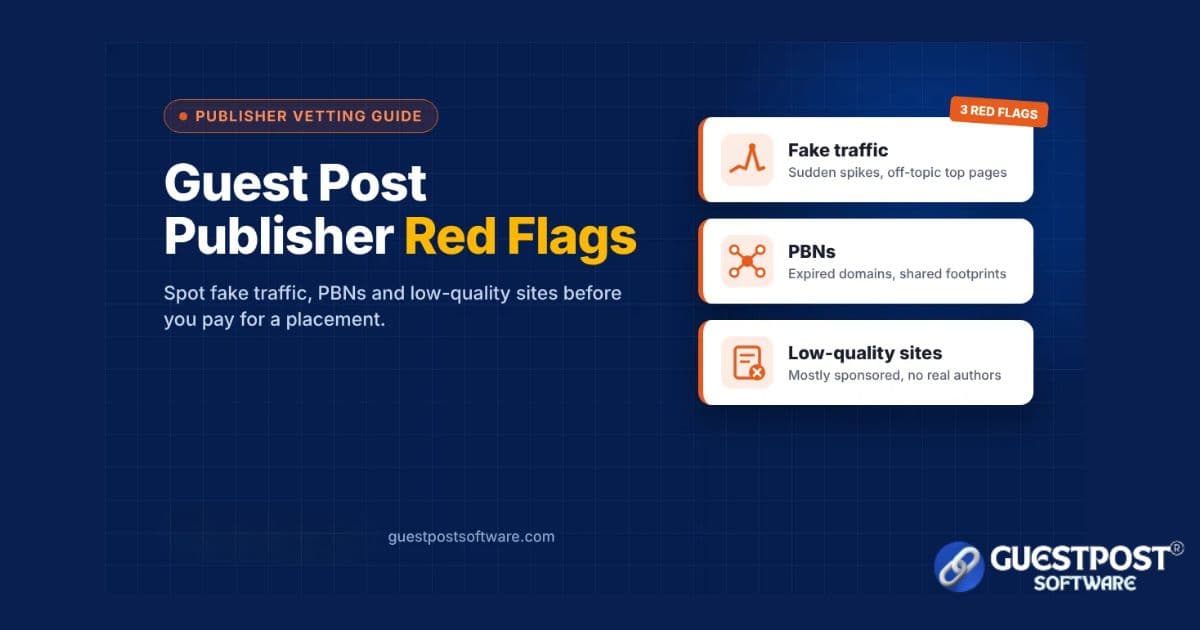
Guest Post Publisher Red Flags: Fake Traffic, PBNs and Low-Quality Sites
Practical guest posting and SEO guidance from Guestpost Software.

How to Verify Website Traffic for Guest Posting Before You Buy
Practical guest posting and SEO guidance from Guestpost Software.

Benefits of Guest Posting in 2026–2027: What Still Works, What Does Not, and How to Measure Real Value
Practical guest posting and SEO guidance from Guestpost Software.
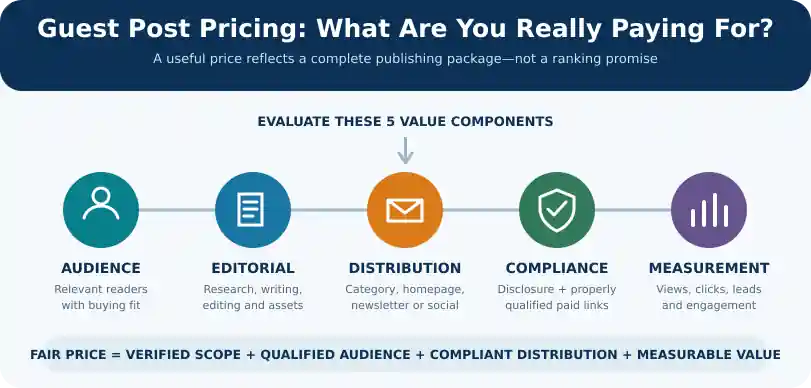
Guest Post Pricing: How to Evaluate Cost and Value in 2026
Practical guest posting and SEO guidance from Guestpost Software.

What Is AI-Powered Media Outreach Platform?
Practical guest posting and SEO guidance from Guestpost Software.